Group 23 Slice 1 Slice 1 Copy 2 facebook Group 16 Group 36 Group 2 Group 41 Group 4 Group 37 Group 11 Group 19 Group 14 Group 20 Group 17 youku-logo copy Group 22 Group 42 Group 23

Addressing Maritime Cybersecurity Challenges in a Digitalized World

The maritime industry depends on innovation to thrive. Advancements in efficient cargo tracking, decarbonization, and seamless operations propel the sector forward. As the maritime industry undergoes rapid digitalization the importance of prioritizing robust cybersecurity measures cannot be overstated in guaranteeing safety on the open seas. Global investments are increasingly directed towards addressing challenges such as fuel efficiency, port capacity, and delays. Yet, we must not overlook the constant danger of cyberattacks.

The Industrial Internet of Things (IIoT) aims to increase productivity and make users lives easier. However, this can only be achieved when the Industrial IoT environment has reliable network connectivity. An unreliable network presents users with several challenges including longer system downtime, cyber security risks, and unstable operations, especially when using a wireless connection. The diagram below uses factory automation as an example to illustrate what kind of concerns our industry partners face when trying to adopt lndustrial loT applications and benefit from them.

Our Certified High-performance Solutions Enable Your Smart Ships

Icon 1

Seamless Maritime Data Management

Facilitates uninterrupted data flow with end-to-end solutions, ensuring seamless communication and accessibility across the maritime network.

Icon 2

Comprehensive Cyber-resilience

Safeguards vessels' cyber-resilience through secure real-time connections, compliance with regulations, and strengthened defenses with our IEC 62443 solutions that provide robust protection against evolving cyberthreats.

Icon 3

Integrated OT Network Solutions

Our comprehensive networking solutions meet E27 requirements to establish secure data infrastructure and enable seamless process visualization both onboard and ashore, enhancing operational efficiency and safety across the maritime environment.

From Navigation to Maintenance—Comprehensive Solutions for Your Vessel

  • Automated Rubber-tired Gantry
  • Integrated Navigation Systems
  • Smart Ship Remote Monitoring And Management
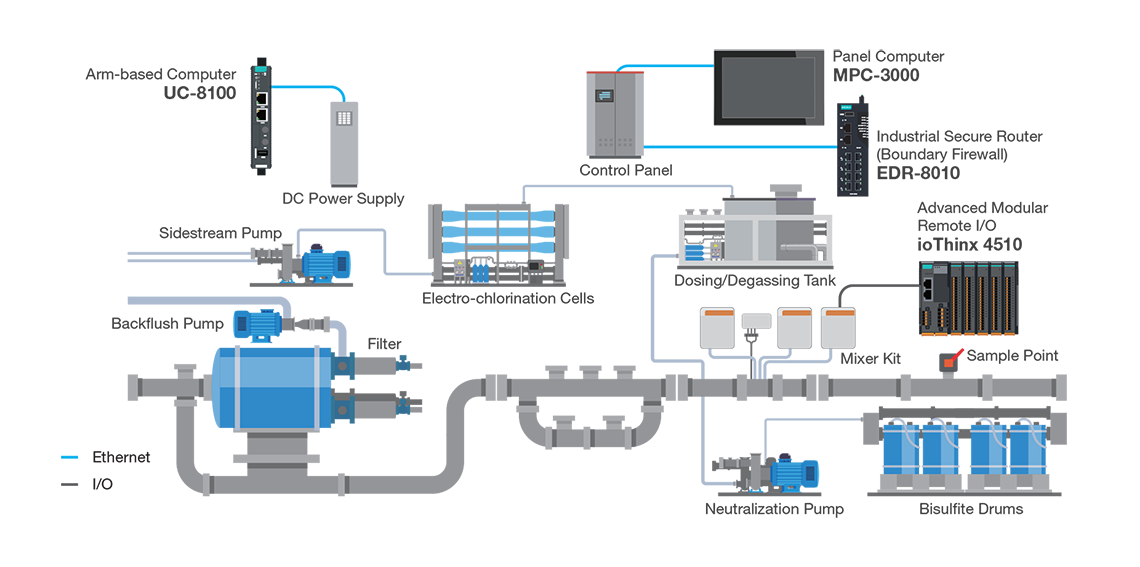
  • Ballast Water Treatment Systems
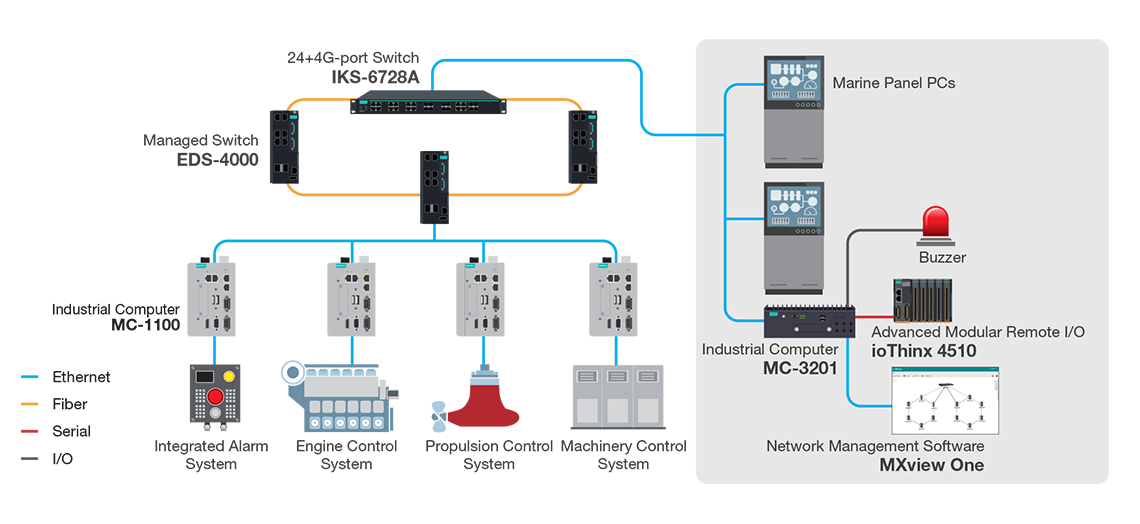
  • Integrated Automation Systems

Revolutionize Port Efficiency with ARTG Cranes

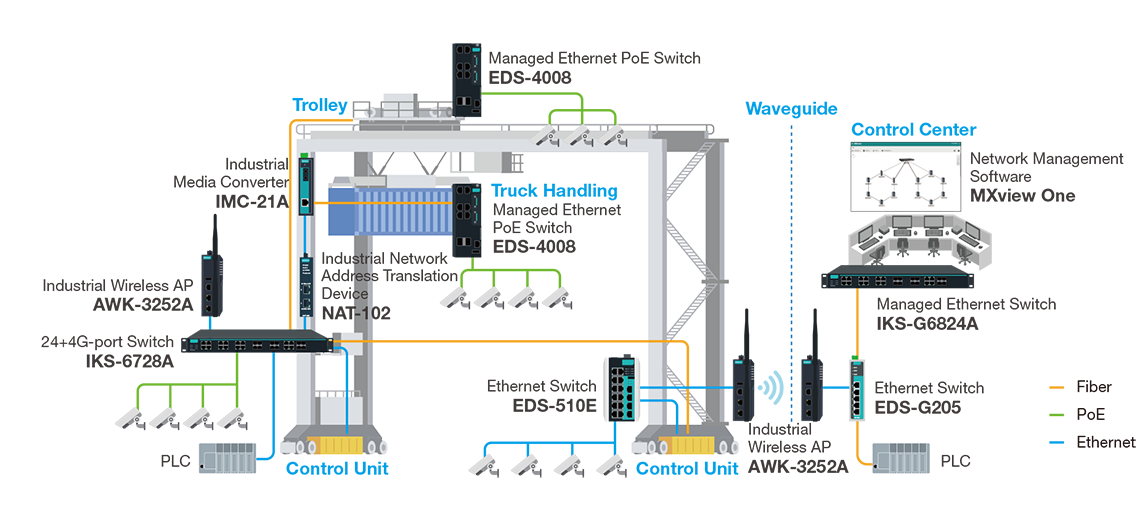
Moxa's networking solutions empower next-generation Automated Rubber-Tired Gantry (ARTG) cranes, a technology that transformed container handling since its introduction in 2013.

These cranes deliver significant improvements in:

  • Efficiency: Optimized workflows and automation minimize downtime
  • Safety: Advanced automation reduces human error and workplace hazards
  • Sustainability: Lower energy consumption contributes to greener port operation

Moxa's reliable switches ensure seamless network connectivity, enabling:

  • Easy Upgrades: Flexible architecture facilitates future system enhancements
  • Centralized Management: Streamlined control optimizes crane performance

Benefits:

  • Reduced downtime for maximized productivity
  • Enhanced safety for a protected workforce
  • Environmentally conscious operations for a sustainable future

Navigate with Confidence: Reliable Integrated Navigation Systems

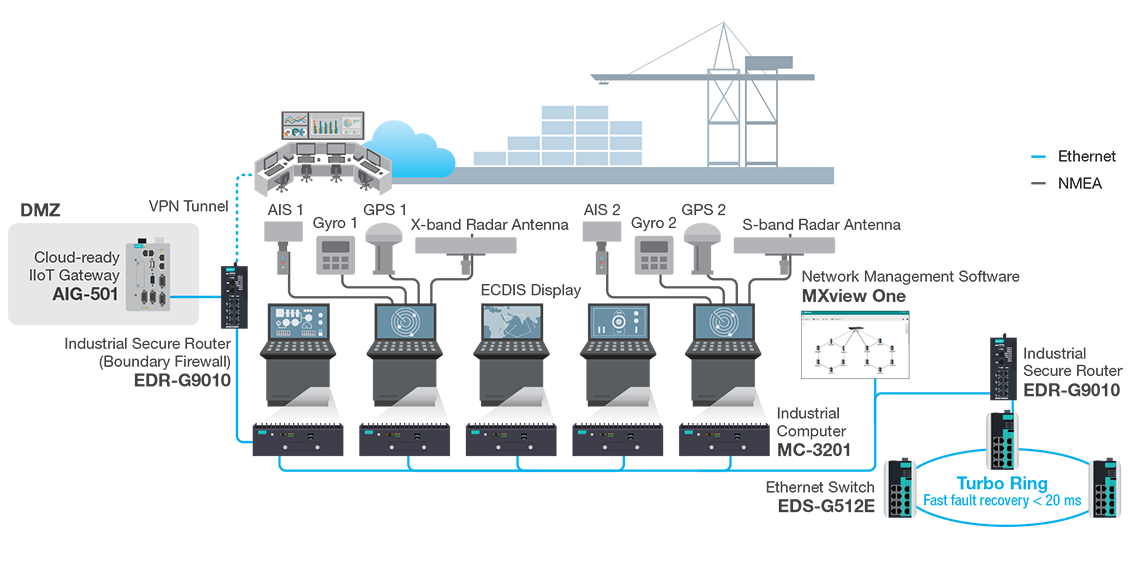
Moxa's marine-grade solutions empower reliable and compliant Integrated Navigation Systems (INS) for your vessels.

Ensure MSC.252(83) Compliance: Redundant INS configurations meet the strict requirements of the International Maritime Organization (IMO) standard.

Reduce Installation Costs: Leverage Moxa's cost-effective serial device servers for seamless integration of legacy navigation equipment.

Maximize Uptime and Reliability:

  • The compact MC-3201 industrial computer is ideally suited for space-constrained environments on ships.
  • EDS-G512E switches boast industry-leading resilience with Turbo Ring and Turbo Chain technologies for rapid network recovery in case of failures.

Benefits:

  • Peace of mind with IMO-compliant navigation systems
  • Streamlined installation for faster deployment and reduced costs
  • Unwavering network reliability for safe and efficient navigation

Optimize Vessel Performance with Remote Monitoring and Management

Moxa empowers next-generation Smart Ship solutions for efficient asset management and proactive maintenance.

Leverage the power of:

  • Cloud-Based Services: Gain real-time insights and optimize vessel performance from anywhere.
  • Remote Monitoring: Identify and address potential issues before they escalate, maximizing uptime.

Unmatched Reliability and Security:

  • MC-3201 Fanless Industrial Computer: Built for harsh marine environments, ensuring reliable performance.
  • EDR-G9010 Secure Router: Safeguard your data with robust cybersecurity measures, such as encrypted communication for protection against cyberthreats.

Benefits:

  • One-Stop Shop: Simplify your operations with a complete solution designed for the maritime industry’s needs.
  • Durability and Compliance: Our marine-grade products are built to last and meet industry regulations.

Ensure Ballast Water Treatment (BWTS) Compliance

Moxa's solutions empower shipbuilders and operators to meet the challenges of the IMO Ballast Water Management Convention.

Comply with D-2 Standards by 2024:

  • Compact and robust BWTS integration requires versatile and space-saving computer solutions.
  • Moxa's computer portfolio and ioThinx Series offer a perfect fit, ensuring reliable data acquisition for regulatory compliance.

Simplify Installation and Maximize Efficiency:

  • Our solutions are designed for streamlined installation, minimizing downtime and integration costs.
  • Enhanced efficiency contributes to optimal BWTS performance.

Benefits:

  • Achieve and maintain compliance with IMO regulations.
  • Streamlined installation for faster deployment and reduced costs.
  • Reliable data acquisition for optimal BWTS performance.

Unify and Optimize Your Ship's Operations with Moxa's IAS Solutions

Moxa empowers next-generation Integrated Automation Systems (IAS) for maximized shipboard efficiency.

Enhanced Productivity Through Centralized Control:

  • Our compact computers seamlessly gather and process data from diverse ship systems.
  • Real-time monitoring provides crucial insights for informed decision-making.
  • Automated alerts ensure timely intervention and prevent safety hazards.

Reliability and Performance Built for the High Seas:

  • Moxa's power-efficient and robust solutions are engineered for reliable operation in maritime environments.
  • Versatile connectivity options and multiple LAN ports guarantee seamless data delivery.
  • Turbo Ring technology enables rapid network recovery, minimizing downtime.

Simplified Management and Peace of Mind:

  • MXview One software streamlines system management and simplifies troubleshooting.
  • DNV-certified devices guarantee long-lasting performance and compliance with maritime regulations.

Benefits:

  • Optimized ship operations for maximized productivity.
  • Enhanced safety through real-time monitoring and automated alerts.
  • Reliable performance and reduced downtime in harsh environments.
  • Simplified system management for streamlined operations.

What Are Maritime Cyberattacks?

Maritime cyberattacks refer to malicious activities that target the digital systems and networks used in the maritime industry. These attacks exploit vulnerabilities in the technology infrastructure of ships, ports, and related logistics and communication systems. They aim to disrupt operations, steal sensitive information, or cause physical damage.

Cyberattacks on maritime systems can have devastating consequences, including:

  • Operational disruptions hindering daily operations and damaging shipping operators' reputation
  • Unauthorized access to critical systems, compromising safety and security
  • Theft of sensitive information causing financial losses
  • Data manipulation leading to wrong decisions
  • Physical damage to ships or cargo due to compromised systems

Why Maritime Cyberattacks Are a Growing Concern

The International Maritime Organization (IMO) defines cyber-risks as potential threats to technology assets that could lead to operational failures, safety breaches, or security vulnerabilities due to compromised information or systems. The surge in cyberattacks in the digital age has exposed the maritime industry to considerable risks. The reasons for the surge of cyberattacks are:

  • Increased digitalization: The maritime industry is rapidly adopting digital technologies for improved efficiency and connectivity, which introduces more cyber vulnerabilities.
  • Complex supply chains: Maritime operations involve many interconnected systems and stakeholders, increasing the potential points of entry for cyberattacks.
  • High-value targets: Ships and ports often carry valuable cargo and sensitive information, making them attractive targets for cybercriminals and state-sponsored actors.
  • Legacy systems: The lack of cybersecurity integration during the design phase has left many maritime systems highly vulnerable to cyberattacks.

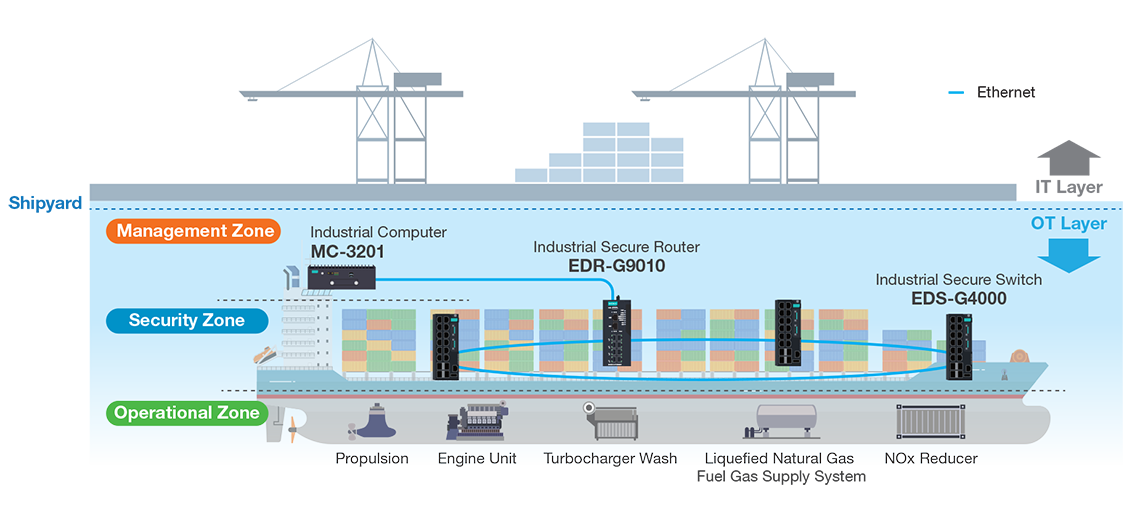
Maritime cybersecurity includes a range of policies, best practices, and technologies to safeguard the entire maritime industry. As the maritime industry embraces digitalization, a balanced approach to converging Information technology (IT) and operational technology (OT) is crucial. OT focuses on monitoring and controlling industrial equipment through hardware and software, while IT pertains to information processing technologies.

Traditional IT security measures need to be integrated with specialized tools designed to meet the unique requirements of OT systems. To ensure comprehensive protection from evolving cyberthreats, the maritime industry must conduct thorough evaluations of all aspects of ship operations.

Data: The Driving Force Behind Maritime Excellence

Cybersecurity goes beyond simply blocking intruders. It's about safeguarding digital assets and data, ensuring business continuity, and staying resilient against both external and internal threats. Thus, protecting ship systems from physical attacks and ensuring the integrity of supporting systems are vital. Data-driven innovation is transforming all areas of maritime excellence, from safety management to efficiency. Data is driving:

  • Advanced route planning for efficient navigation
  • Collision prevention systems for enhanced safety
  • Energy management for intelligent vessels
  • Port automation for reduced waiting times
  • Data processing and analytics for performance optimization, predictive maintenance, and anomaly detection

Navigating the Regulatory Landscape: Compliance Matters

In an increasingly connected world, the security, safety, and reliability of maritime systems are paramount. The maritime industry recognizes the critical importance of robust cybersecurity oversight in mitigating emerging cyber-risks and ensuring the resilience of critical infrastructure.

Compliance with global regulations—including IMO Resolution MSC.428(98), IEC 61162-460, ISO/IEC 27001, ISA/IEC 62443, IEC 60945, and IACS Unified Requirements (URs) E26 and E27—is essential for meeting stringent cybersecurity standards. As data-driven strategies continue to improve safety and operational efficiency, adopting certified solutions is fundamental to establishing secure and trusted data flows across maritime networks.

For example, IEC 61162-460 plays a crucial role in ensuring secure and reliable data exchange within maritime communication and navigation networks. Additionally, DNV Cybersecurity Type approved devices can provide an added layer of security, ensuring that network devices comply with strict cybersecurity protection standards. This in turn simplifies and streamlines compliance certification processes.

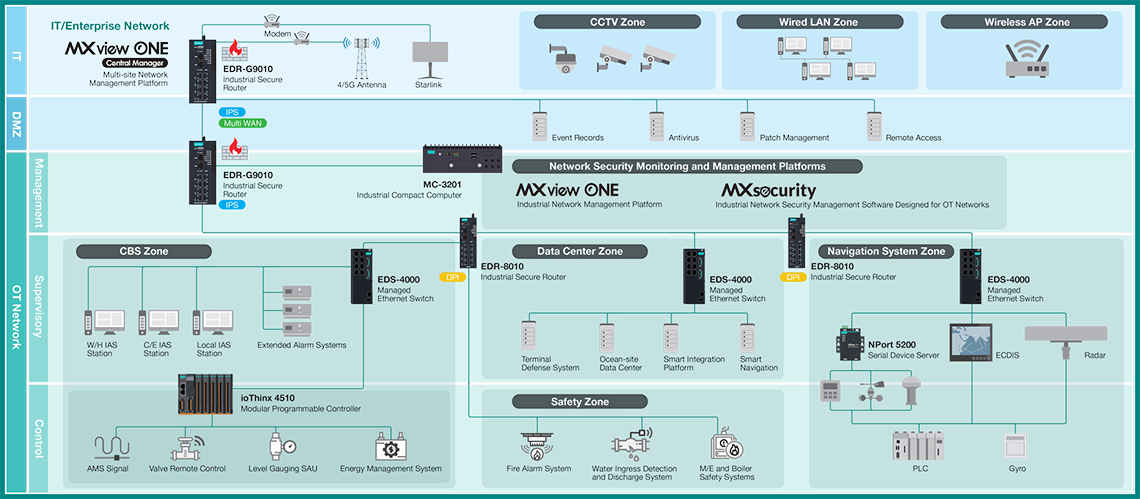
Moxa’s EDR-G9010 and EDR-8010 industrial secure routers, together with the EDS-4000/G4000 Series industrial switches, have obtained DNV type approval for security capabilities of DNV SP2, IACS UR E27 Rev.1, and IEC 61162-460 Edition 3.0 certification as a 460-gateway, -forwarder, and -switch. These achievements reaffirm their capability to help shipbuilders and system integrators streamline compliance with IACS UR E26 and E27, while enhancing cybersecurity and ensuring operational reliability across maritime networks.
Find the Right Solution for Your Application
Our experienced specialists are ready to help. Use the form below to get a free consultation for your project, no matter how big or small.